Jordanian military intercepts incoming drones and ballistic missiles as Iran expands retaliation across the Middle East
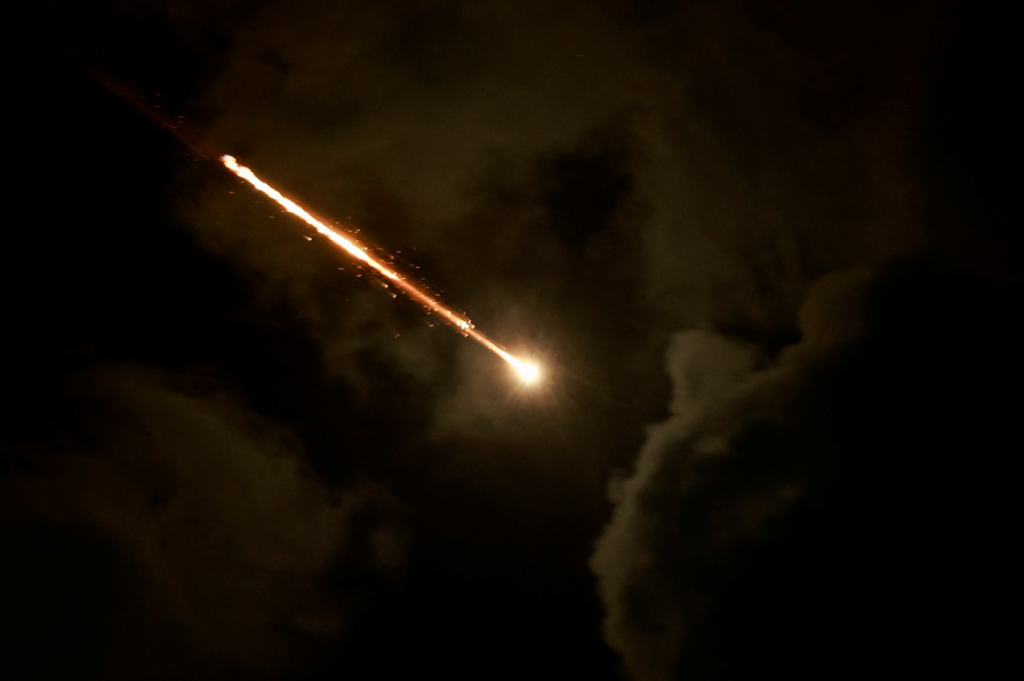
The Middle East entered a more volatile phase after Jordan’s armed forces confirmed that Iranian missiles and drones had targeted the kingdom during the latest wave of regional escalation. According to official military statements, Jordan’s air defense systems successfully intercepted multiple incoming threats, preventing casualties but raising serious concerns about the widening scope of the Iran-Israel confrontation. The incident underscores how rapidly the conflict is spilling beyond its primary battlefield and drawing neighboring states into the line of fire.
Jordanian authorities reported that air defenses engaged dozens of aerial threats. Military sources stated that the armed forces intercepted 49 drones and ballistic missiles that were heading toward Jordanian territory. Earlier in the crisis, officials also confirmed that at least two ballistic missiles specifically targeting the country were shot down by the Royal Jordanian Air Force. While the interceptions prevented loss of life, falling debris caused limited material damage in several regions, highlighting the growing risk to civilian areas.
The Jordanian Interior Ministry later revealed the nationwide scale of the incident. Authorities recorded 73 separate reports of falling missile fragments and debris across multiple governorates, including Amman, Zarqa, Madaba, Irbid, and Aqaba. Emergency teams responded to each location, and officials urged the public not to approach suspicious objects. Despite the alarming number of incidents, the government confirmed that no fatalities were reported.
The missile activity occurred in the broader context of Iran’s retaliation following joint U.S. and Israeli strikes on Iranian territory. Regional monitoring indicated that Tehran launched coordinated drone and missile attacks across several Middle Eastern countries, particularly those hosting U.S. military assets. According to conflict trackers, Jordan was among multiple states — including the United Arab Emirates, Bahrain, Kuwait, and Qatar — that faced incoming projectiles during the same wave of attacks.
Air raid sirens sounding simultaneously in Israel and Jordan further illustrated the interconnected nature of the threat environment. Reports indicated that sirens were activated in Jordan at the same time missiles were detected heading toward Israeli territory, with explosions heard that were consistent with air defense interceptions. This suggests that some projectiles may have passed through or near Jordanian airspace en route to other targets, complicating the operational picture.
International news coverage confirms that Iran’s retaliatory campaign has become unusually broad in geographic scope. In addition to Israel, missiles and drones have struck or threatened multiple Gulf states, with most attacks intercepted but still causing regional alarm. Analysts say the pattern reflects Tehran’s strategy of signaling deterrence while attempting to pressure U.S. and allied military infrastructure across the region.
Jordan’s strategic position makes it particularly vulnerable in such scenarios. The kingdom hosts important Western military facilities and sits geographically between Israel, Iraq, and Saudi Arabia — all potential corridors for missile and drone traffic. Security experts note that even when Jordan is not the primary intended target, its airspace can become exposed during large-scale regional exchanges.
Amman has responded cautiously but firmly. Officials condemned violations of the kingdom’s airspace and emphasized that the armed forces remain on high alert. Military sources stressed that the successful interceptions demonstrate the readiness of Jordan’s integrated air defense network, but they also warned that continued regional escalation could increase risks to civilian safety and aviation routes.
The broader geopolitical implications are significant. Jordan has traditionally maintained a delicate balancing act in regional conflicts, cooperating closely with Western security partners while avoiding direct confrontation with Iran. However, repeated missile incidents could force Amman to adopt a more assertive defensive posture or deepen security coordination with allies.
Security analysts warn that the situation remains highly fluid. If the Iran-Israel confrontation intensifies further, missile spillover into neighboring airspace could become more frequent. The growing use of long-range drones and ballistic systems means that even countries not directly involved in the conflict face rising exposure to accidental or deliberate strikes.
For now, Jordanian officials continue to stress that the situation is under control. Air defenses remain fully operational, and authorities are closely monitoring regional developments. Nevertheless, the latest incident serves as a stark reminder that the Middle East conflict is no longer geographically contained. With multiple state and non-state actors involved, the risk of miscalculation or unintended escalation remains elevated — and countries like Jordan are increasingly caught in the crossfire.