Russian President links global energy spike to regional instability, raising fears of prolonged market volatility
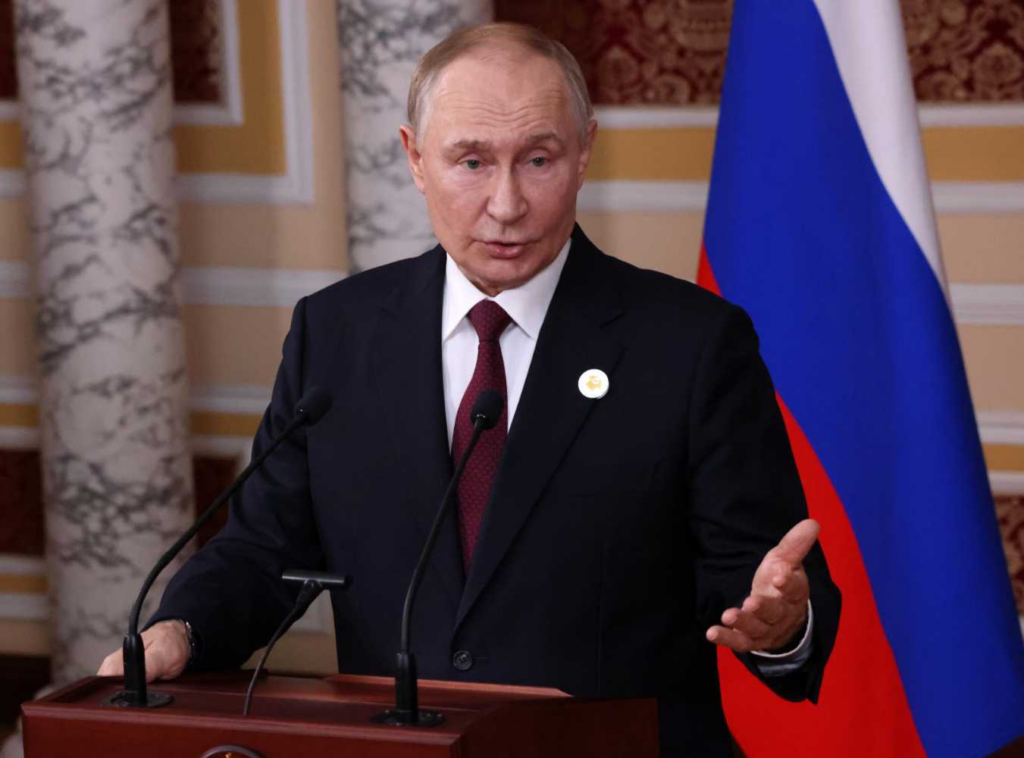
Russia’s President Vladimir Putin has warned that rising tensions in the Middle East are pushing global oil and gas prices higher, adding fresh uncertainty to already fragile energy markets. His remarks come as traders, governments, and consumers worldwide closely monitor the economic fallout from escalating military activity in the region.
Speaking during recent comments on global energy dynamics, Putin argued that instability in the Middle East—particularly involving Iran and Israel—has historically had an immediate impact on hydrocarbon markets. Analysts broadly agree that geopolitical risk in the region often translates into price volatility because the Middle East remains one of the world’s most critical energy corridors.
Market data in recent days appears to support the concern. Oil and gas prices have climbed following military exchanges and disruptions to shipping routes. According to energy market reporting, the conflict has already forced shutdowns of some regional facilities and complicated maritime traffic through the strategically vital Strait of Hormuz. This narrow waterway handles a significant share of global oil shipments, meaning even limited disruption can ripple quickly through international markets.
Putin’s warning highlights a broader fear among energy economists: that a prolonged or widening conflict could sustain upward pressure on prices for months. When supply risks increase—even if actual output losses are limited—traders typically build a buffer into pricing. That risk premium can push fuel costs higher for importing countries across Europe, Asia, and beyond.
For consumers, the immediate impact is often seen at the pump. Higher crude prices generally translate into more expensive gasoline and diesel after a short lag. Several analysts note that if tensions continue, retail fuel prices in major economies could rise further in the coming weeks. Developing economies that rely heavily on imported energy, including many in South Asia, tend to feel the squeeze most acutely because currency pressures amplify the cost increase.
Natural gas markets are also sensitive to Middle East instability. While much of the world’s liquefied natural gas (LNG) supply comes from multiple regions, the Gulf remains a major exporter. Any perceived threat to export infrastructure or shipping lanes can trigger price spikes in European and Asian gas benchmarks. Putin suggested that such dynamics are already unfolding, though the full economic impact will depend on whether the conflict escalates or stabilizes.
Geopolitically, Moscow has positioned itself as both a major energy exporter and a stakeholder in Middle East stability. Russia benefits financially from higher global oil prices, which can boost state revenues. However, extreme volatility can also damage global demand and economic growth, ultimately hurting producers as well. This dual reality explains why Russian officials often issue cautionary statements during periods of regional unrest.
Energy experts note that markets are currently being driven more by risk perception than by confirmed large-scale supply losses. So far, global oil production capacity outside the conflict zone has helped cushion the shock. Strategic reserves in major consuming countries and flexible output from producers like the United States have also provided some buffer against sharper spikes.
Still, the situation remains highly fluid. If military activity were to expand or directly damage major production or export infrastructure, analysts warn that prices could move significantly higher. Much depends on the security of shipping through the Strait of Hormuz and whether diplomatic efforts succeed in containing the confrontation.
Financial markets are already pricing in a degree of uncertainty. Energy stocks have shown increased volatility, while some governments are reportedly reviewing contingency plans for fuel supply disruptions. Central banks are also watching closely because sustained energy inflation can complicate efforts to control overall consumer prices.
Putin’s comments ultimately reflect a widely shared concern across the global energy community: geopolitical flashpoints in the Middle East continue to exert outsized influence on oil and gas markets. Unless tensions ease, the risk premium embedded in energy prices may persist, keeping fuel costs elevated and adding another layer of pressure to the world economy.