Full Speech Footage and Digital Forensic Analysis Confirm Video of Israeli PM Is Authentic

A viral video circulating on social media platforms recently sparked widespread speculation after users claimed that Benjamin Netanyahu, the Prime Minister of Israel, appeared to have six fingers on one hand during a public speech. The claim quickly spread across platforms such as X (formerly Twitter), TikTok, and Facebook, with many users alleging that the footage had been generated or manipulated using artificial intelligence. However, a detailed fact-check and digital forensic review has confirmed that the claim is false and that the original video is authentic.
The video in question shows Netanyahu delivering a public address in which he gestures with his hands while speaking. A short clip taken from the speech was edited and circulated online with zoomed-in frames that appeared to show an extra finger. Within hours, the clip gained significant traction, prompting claims that the video had been artificially generated or altered. Some social media users suggested the supposed “sixth finger” was proof of AI-generated footage, while others used the clip to spread conspiracy theories about manipulated media.
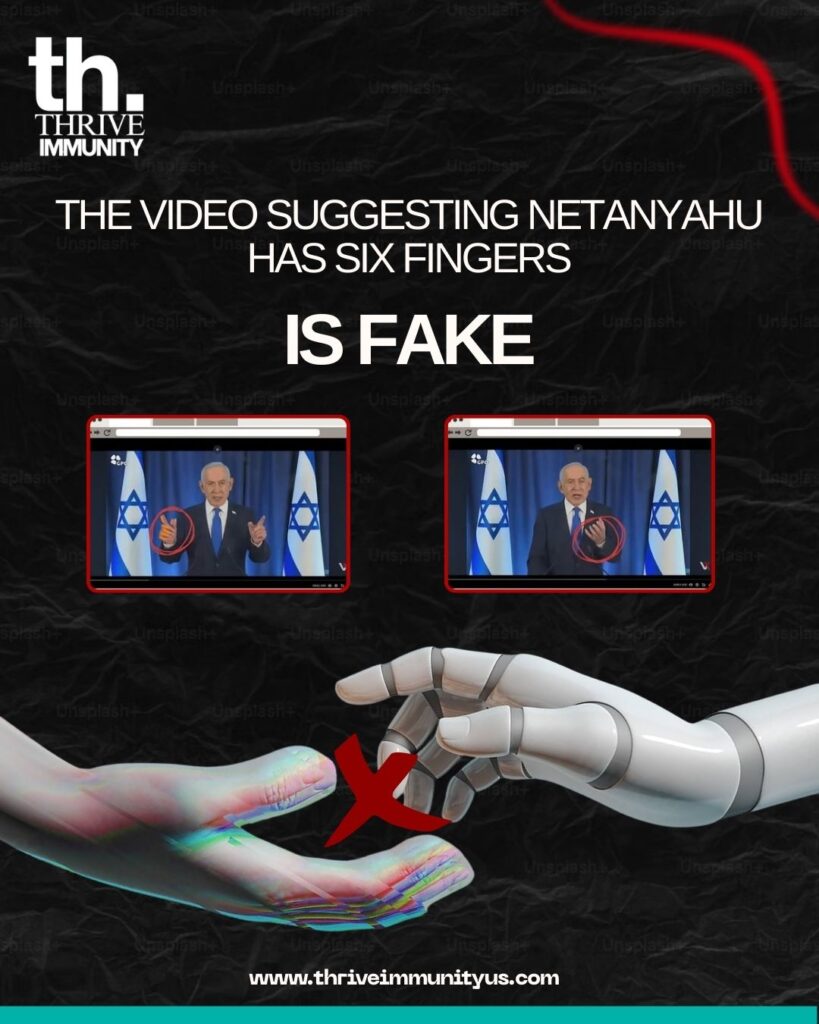
Fact-checkers quickly investigated the viral claim by reviewing the complete speech hosted on the official Israeli Government Press Office website, where the full unedited video of Netanyahu’s address is publicly available. When the original footage is viewed in its entirety and at normal playback speed, Netanyahu’s hands clearly show five fingers on each hand, with no evidence of an extra digit. The visual distortion seen in the viral clip appears to result from frame compression, motion blur, and low-resolution editing, which can sometimes create optical illusions in fast-moving images.
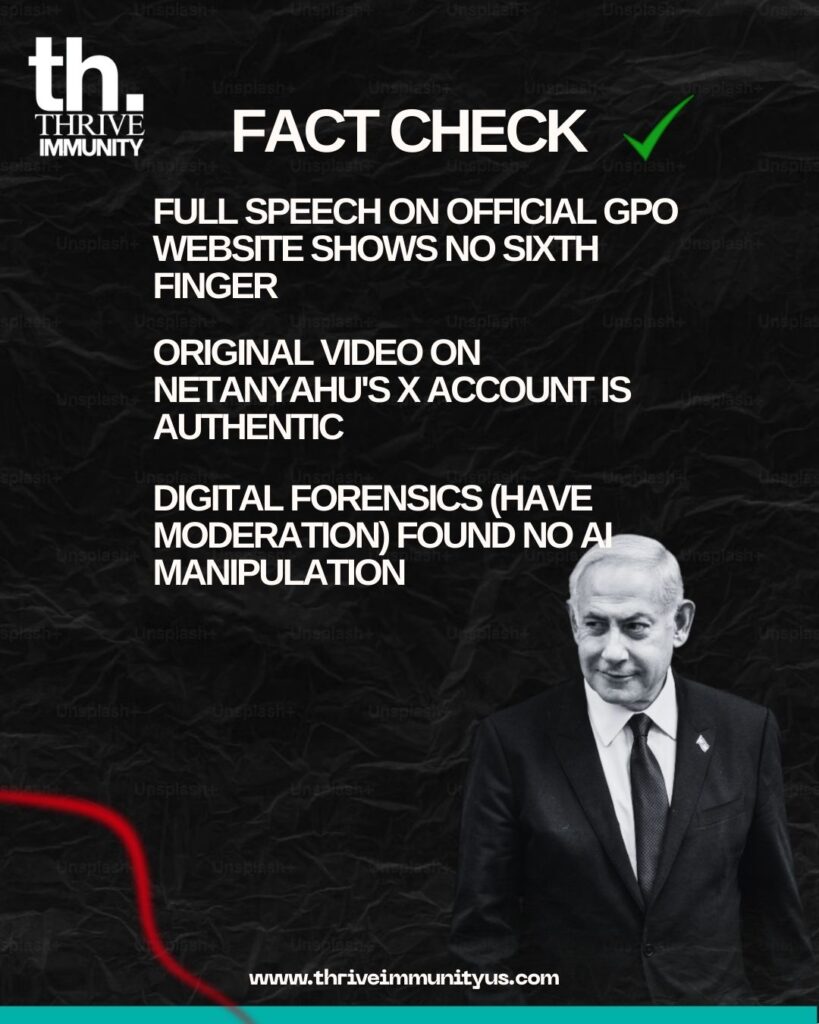
Further confirmation came from the original video posted on Netanyahu’s official X account, which also displays the speech without any visible anomalies. The footage matches the version archived by the Government Press Office, confirming that the widely shared clip was taken from legitimate material rather than an AI-generated video.
Digital forensic analysts also examined the footage to determine whether any artificial intelligence manipulation had occurred. Using standard media authentication techniques—such as frame-by-frame inspection, compression artifact analysis, and metadata examination—experts found no evidence of AI generation or synthetic manipulation. These results indicate that the viral clip was likely misinterpreted after being edited, zoomed, and redistributed in lower quality formats.
Experts in digital media say that such incidents are becoming increasingly common as social media users become more aware of AI-generated content. While awareness of deepfakes and synthetic media is important, it can also lead to false accusations of manipulation when viewers misinterpret normal video artifacts. Lighting conditions, motion blur, camera angles, and compression errors can sometimes create illusions that appear unusual when viewed in isolation.
The spread of the six-finger claim also illustrates how quickly misinformation can circulate online. A short edited clip—often just a few seconds long—can travel widely across platforms before fact-checkers have time to verify the original source. By the time corrections are issued, millions of users may have already seen or shared the misleading version of the content.
Media analysts emphasize that the best way to evaluate such claims is to check the full original footage rather than relying on short viral segments. Watching the complete speech from an official source provides important context and helps prevent misunderstandings caused by selective editing or image distortion.
This case also highlights the role of official archives such as the Government Press Office (GPO) in preserving authentic recordings of public speeches and government events. By maintaining verified copies of original footage, these archives allow journalists, researchers, and the public to confirm whether viral clips accurately represent reality.
Misinformation about public figures is not a new phenomenon, but the speed at which it spreads has increased dramatically in the age of social media. False claims can sometimes influence public perception, political debates, and international discussions if they are not quickly corrected. As a result, fact-checking organizations and digital forensic experts are increasingly working together to identify misleading content and provide verified explanations.
In the case of the viral Netanyahu video, all available evidence—from the full speech recording to independent forensic analysis—confirms that the footage is genuine and that no sixth finger exists. The apparent anomaly seen in the viral clip is simply a visual illusion created by video compression and motion blur rather than any form of artificial intelligence manipulation.
As debates about AI-generated media continue worldwide, experts encourage users to approach viral claims with caution and verify information through reliable sources. Authentic videos can sometimes appear distorted when edited or compressed, and not every unusual visual detail indicates the presence of synthetic media.
Ultimately, the investigation into the six-finger claim serves as a reminder that context and verification are essential in evaluating viral content. When the complete footage and technical analysis are examined together, the conclusion is clear: the viral claim about Benjamin Netanyahu having six fingers is unfounded and the original video remains authentic.