Beijing accuses Washington of violating international law and undermining maritime security in the Caribbean
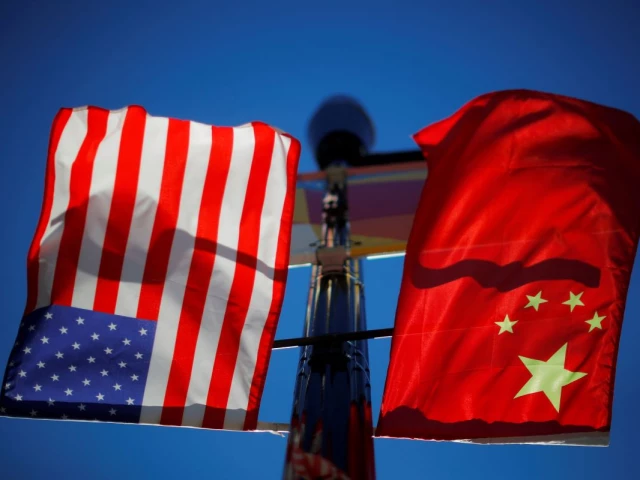
China has sharply criticized the United States for what it described as the “arbitrary seizure” of foreign vessels operating in the Caribbean, accusing Washington of abusing its power, violating international maritime law, and threatening regional stability. The remarks, issued by China’s foreign ministry, reflect growing diplomatic tensions between the world’s two largest economies amid broader disputes over security, trade, and global influence.
According to Chinese officials, recent US actions involving the interception and seizure of vessels in Caribbean waters demonstrate a pattern of unilateral enforcement that disregards international norms. Beijing argued that such operations, often justified by Washington as part of counter-narcotics or sanctions enforcement efforts, lack sufficient legal basis and undermine the principle of freedom of navigation.
A spokesperson for China’s Ministry of Foreign Affairs said the United States was “acting above international law” by detaining vessels flying foreign flags without proper authorization from international bodies or coastal states. The spokesperson added that these actions risk setting a dangerous precedent, where powerful nations impose their domestic laws extraterritorially under the guise of security operations.
The criticism follows reports that US authorities intercepted multiple foreign-linked vessels in the Caribbean, allegedly connected to illicit trade networks or sanctions violations. While US officials maintain that such actions are legal and necessary to combat transnational crime, Beijing insists that enforcement must be conducted through multilateral frameworks and with respect for sovereign rights.
China emphasized that maritime law enforcement should be governed by international conventions, including the United Nations Convention on the Law of the Sea (UNCLOS). Although the United States has not formally ratified UNCLOS, it often claims to uphold its principles. Chinese officials pointed to this contradiction, arguing that Washington selectively applies international law when it suits its strategic interests.
The Caribbean has long been a focal point for US security operations, particularly in efforts to counter drug trafficking, arms smuggling, and illegal financial flows. However, analysts note that increased geopolitical competition has added a new layer of complexity, as global powers become more sensitive to actions perceived as expanding influence or control over strategic waterways.
Beijing’s response also reflects broader concerns among developing nations about unilateral sanctions and enforcement measures. China has repeatedly criticized what it calls the “long-arm jurisdiction” of the United States, arguing that such practices harm global trade and disproportionately affect smaller states and commercial actors with limited legal recourse.
US officials have defended their actions, stating that vessel seizures are conducted in accordance with international cooperation agreements and are aimed at disrupting criminal networks that threaten regional and global security. Washington argues that its operations often involve coordination with partner nations and regional authorities, though details of specific cases are rarely made public.
Diplomatic observers say China’s strong language signals a willingness to more openly challenge US maritime enforcement beyond traditional flashpoints such as the South China Sea or the Taiwan Strait. By highlighting incidents in the Caribbean, Beijing is broadening its narrative that Washington’s global security posture is destabilizing and inconsistent.
The dispute also comes amid rising tensions over sanctions enforcement, particularly involving countries accused by the US of bypassing restrictions through complex shipping and financial arrangements. China has frequently opposed unilateral sanctions not approved by the United Nations, arguing that they undermine global governance mechanisms and fuel geopolitical confrontation.
Regional experts caution that such public diplomatic clashes could complicate cooperation on shared challenges, including counter-narcotics efforts, maritime safety, and disaster response in the Caribbean basin. They warn that politicizing maritime enforcement risks eroding trust between major powers at a time when coordination is increasingly necessary.
While China does not maintain a significant military presence in the Caribbean, it has expanded economic ties with several countries in the region through investment and infrastructure projects. This growing footprint makes Beijing more attentive to security developments and more vocal in defending what it sees as fair treatment of international commerce.
As tensions persist, analysts say the episode underscores deeper disagreements between China and the United States over the interpretation of international law, the use of power, and the future of global maritime governance. Whether the dispute leads to formal diplomatic engagement or further rhetorical escalation remains uncertain, but it highlights the increasingly global scope of US-China rivalry.