KABUL:
The United Nations on Sunday urged the Taliban authorities to immediately lift their ban on Afghan women working in UN offices, warning that the restriction threatens to disrupt life-saving humanitarian services across Afghanistan.
Since returning to power in 2021, the Taliban have imposed sweeping restrictions on women — banning them from most jobs, parks, beauty salons, and schools beyond the age of 12. The latest measure, introduced in September, bars Afghan women employed by the UN from entering its offices in the country.
UN Warns of Threat to Essential Humanitarian Work
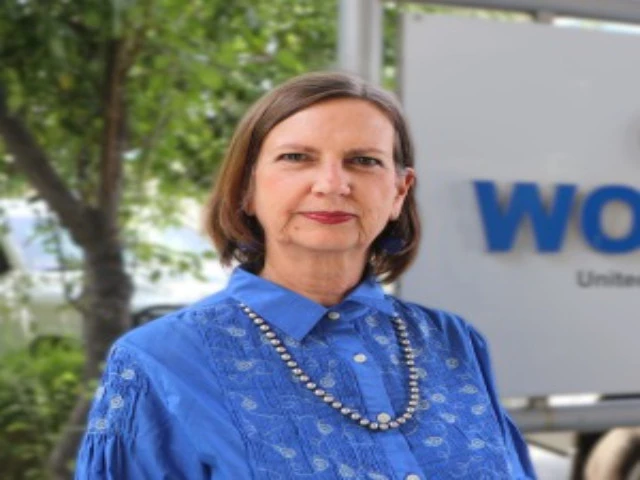
Susan Ferguson, the UN Women special representative in Afghanistan, called for the reversal of the ban in a strongly worded statement.
“We call for the ban on Afghan women staff and contractors from entering United Nations premises to be reversed, and for their safe access to offices and the field,” she said.
Ferguson stressed that the longer the restrictions stay in place, the greater the danger to critical aid programs supporting Afghan women and children.
“These restrictions pose a severe risk to life-saving services,” she said, adding that the measures violate fundamental UN principles of human rights and equality.
Hundreds of Women Affected, UN Staff Forced to Work Remotely
Although the statement did not specify the exact number of employees impacted, UN sources say several hundred Afghan women have been shut out of their workplaces.
For the past three months, many staff have been forced to work remotely while continuing to assist:
- Victims of recent deadly earthquakes
- Afghan migrants deported from Pakistan and Iran
- Vulnerable women and girls requiring protection and support
Ferguson described the contributions of Afghan women aid workers as “indispensable”, noting that only through their direct presence can the UN safely reach women and girls and deliver culturally appropriate assistance in conservative communities.
No Response from Taliban Authorities
The Taliban authorities did not immediately respond to AFP’s request for comment.
Previous Taliban statements have defended restrictive policies as “cultural” or “religious” measures — claims widely rejected by the international community.
The UN has repeatedly warned that without the participation of Afghan women, humanitarian outreach becomes severely limited, especially in remote and gender-segregated areas where male staff cannot interact with women.
As Afghanistan continues to face deepening economic hardship, widespread poverty, and ongoing displacement, the UN says restoring Afghan women’s access to work is essential to preventing a worsening humanitarian crisis.