Decision to expand West Bank settlements raises international concerns over peace process and regional stability
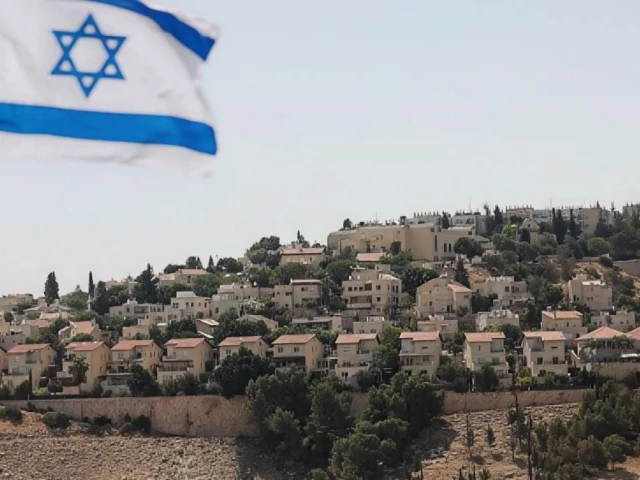
Israel’s security cabinet has formally approved the construction of 19 new settlements in the West Bank, a move that has intensified tensions in the region and sparked widespread international criticism. The announcement, made by senior Israeli officials, marks one of the most significant expansions of settlements in recent years and underscores the government’s ongoing strategy to solidify its presence in contested territories. The decision comes amid heightened diplomatic scrutiny and ongoing Israeli-Palestinian conflict, with concerns that it could undermine prospects for a negotiated peace.
According to government sources, the approved settlements will be constructed in various strategic locations across the West Bank, including areas near existing Jewish settlements and key transport corridors. Israeli authorities stated that the decision aligns with national security considerations and long-term demographic planning, aiming to reinforce Israel’s territorial claims and accommodate a growing population. Construction permits for housing, infrastructure, and community facilities have reportedly been fast-tracked to begin implementation immediately.
Palestinian leaders and residents of the West Bank condemned the announcement as a violation of international law and an encroachment on Palestinian land. The expansion is seen by many as a direct obstacle to the creation of a contiguous Palestinian state and a major setback for the two-state solution. Statements from the Palestinian Authority emphasized that settlement expansion not only exacerbates tensions but also provokes a cycle of violence and retaliation, making diplomatic negotiations increasingly difficult.
The international community has reacted strongly to the approval, with the United Nations, European Union, and several Arab countries issuing statements expressing concern. UN officials reaffirmed that Israeli settlements in the West Bank are considered illegal under international law, including the Fourth Geneva Convention, which prohibits the transfer of an occupying power’s civilian population into occupied territories. Diplomatic sources have warned that settlement expansion could further isolate Israel on the global stage and complicate relations with key allies.
Security analysts suggest that the approval of 19 new settlements is part of a broader strategy by the Israeli government to strengthen control over the West Bank, particularly in areas surrounding Jerusalem and other sensitive locations. The new settlements are expected to include residential units, security infrastructure, and support facilities designed to accommodate both civilian and security personnel. Observers note that these measures may heighten friction with Palestinian communities and increase the likelihood of clashes over land ownership, access to resources, and movement restrictions.
The timing of the announcement is particularly sensitive, as it comes during a period of heightened violence between Israeli forces and Palestinian groups in the West Bank and Gaza Strip. Recent weeks have seen a surge in protests, attacks, and countermeasures, further straining security and diplomatic efforts in the region. Experts warn that expanding settlements could exacerbate tensions, triggering new confrontations and complicating peace negotiations.
Humanitarian organizations have also expressed concern over the impact of settlement expansion on Palestinian communities. Many residents face displacement, loss of agricultural land, restricted access to water, and limitations on mobility due to the presence of settlements and associated infrastructure. Aid agencies have highlighted that these developments not only affect daily life but also hinder economic development and access to education, healthcare, and essential services.
Israeli officials, however, defend the expansion as a legitimate exercise of national sovereignty and a response to security needs. They argue that settlements provide strategic depth, protect borders, and ensure access to vital resources. Some government representatives have also emphasized that the construction projects will create jobs and economic opportunities, particularly for Israeli citizens relocating to new settlement areas.
Diplomatic observers believe that the approval of new settlements could influence the trajectory of future peace talks. Palestinian negotiators have repeatedly insisted that any peace agreement must include a freeze on settlement expansion, while Israel maintains that settlement activity is non-negotiable. This fundamental disagreement continues to pose a major obstacle to achieving lasting peace and stability in the region.
In conclusion, the Israeli security cabinet’s approval of 19 new settlements in the West Bank represents a critical juncture in the ongoing Israeli-Palestinian conflict. While Israel emphasizes national security and strategic imperatives, Palestinian leaders and international observers warn that the expansion undermines the prospects for peace, heightens tensions, and threatens the stability of the region. As construction begins, the situation will likely draw continued global attention, shaping diplomatic, humanitarian, and security dynamics for years to come.